
There’s nothing better than finding some time to snuggle with your furry best friend. But when their breath isn’t exactly a bouquet of flowers, it can ruin the moment.
Fear not, there are lots of ways to tackle your dog’s bad or fishy breath, while keeping their teeth clean and healthy.
You can get specially formulated dry foods, additives for their water and chew toys that help clean teeth if used frequently.
But often, the best way to keep your dog’s teeth clean is by brushing.
Possible signs of dental problems
It’s sometimes difficult to recognise if your dog is in pain because of dental disease. They’ll often continue to eat, which can hide how serious the problem is.
Here are a few signs to look for that could mean your dog has dental problems:
- bad breath, excessive drooling or blood-stained saliva
- change in their eating habits, e.g. preferring soft food to biscuits
- red or swollen gums (gingivitis- inflammation starts as a thin red line along the gum)
- discolouration of the teeth. Plaque is a sticky, colourless build-up on the teeth. Plaque can then lead to tartar (a hard white to brown coating that causes dental disease)
- swelling on the face
- pawing at or rubbing their mouth or face
- fractured, visibly loose or missing teeth.
We offer free dental clinics with our vet nurses or free nurse checks with our pet health plans.
There are several possible reasons your dog’s breath might smell fishy or unpleasant. From poor dental hygiene to something more serious like an infection.
Many causes of bad or fishy breath in dogs are easily resolved. Speak to us if you’re concerned. The vet may just recommend brushing, which we’ll cover on this page.
What should you use to brush your dog’s teeth?
You can buy enzymatic dog toothpaste and a brush or rubber thimble from the vet practice or pet shop. Enzymatic toothpaste helps break down plaque and reduces bad breath. They also come in enticing flavours like chicken or liver.
Never use human toothpaste as it can be toxic for dogs.
How to brush your dog’s teeth
Follow the steps below slowly over multiple sessions, so your dog can get comfortable with the taste and sensation of toothbrushing.
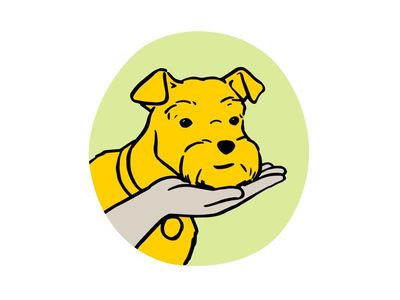
Help support your dog’s head by asking them to rest their chin on your hand, then gently touch the outside of your dog’s lips. Remove your hand and give your dog a treat straight away.
Repeat this process, briefly touching both the upper and lower jaw. Gradually start to build up the length of time you do this for.
2
Progress to touching inside their mouth
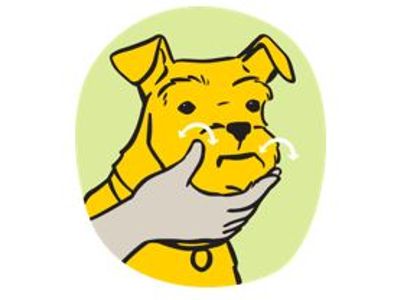
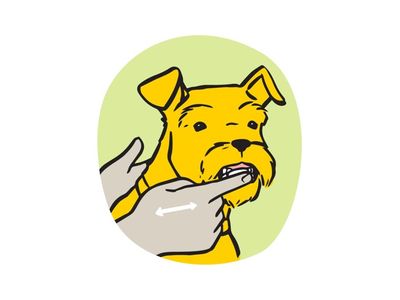
Providing your dog is relaxed and comfortable with this, you can progress to touching inside their mouth. With your hand in the same position as before, gently slide a finger inside your dog’s upper lips and over the gums. Remove your hand and give them a treat and praise …
3
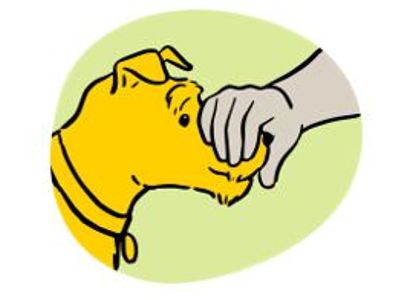
Next work on helping your dog feel comfortable and confident with your hand resting gently on top of their snout. Gently place your hand over their snout and give them a reward. Repeat this and providing they’re relaxed, you can start to add in touching and lifting their teeth and gums. You don’t need to open your dog’s mouth, by lifting the upper or lower lip you can reach their teeth. Reward them straight away with praise and treats. …
4
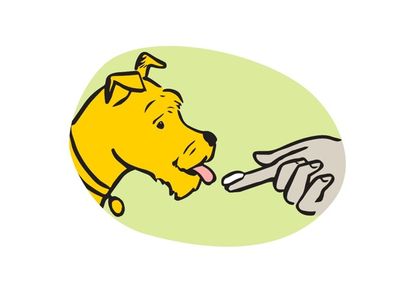
Once they are comfortable with those steps you can lift their top lips and slide your finger over their teeth and gums. You don’t need to open your dog’s mouth, by lifting the upper or lower lip you can reach their teeth. Reward them straight away with praise and treats.
 5
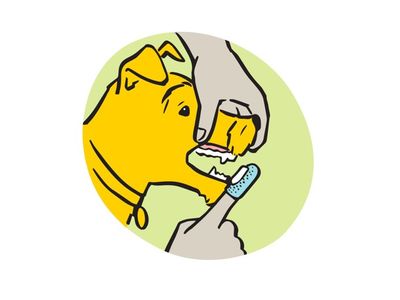
5Now you can progress to using the brush to gently touch your dog’s teeth and gums. Start by brushing a couple of teeth in a circular motion. Over multiple, short sessions, build up very gradually until you can brush all the teeth. Brush using a circular motion concentrating on the gum line.
Practise this stage for a while before you add toothpaste. Always reward your dog straight away with a treat after every session.
6
Add toothpaste
Finally, put a little bit of toothpaste on your brush, let your dog sniff and lick it, then gently slide the toothpaste under their lip and start to brush their teeth in a circular motion.
As always reward your dog for doing so well!
Options alongside brushing
Tooth brushing is the best way to keep your dog’s mouth healthy. Your vet may also recommend teeth gels, specific food types or treats and toys to help with oral health. These can be used alongside brushing, or while you’re working with your dog to get them used to tooth brushing.
Always consult your vet before using any products alongside brushing, and book in with a nurse or vet for a dental check.